WE OFFERS STUDENTS AND VOLUNTEERS OPPORTUNITIES TO PARTICIPATE IN OR CONDUCT RESEARCH ON A VARIETY OF PLANT AND ANIMAL SPECIES.
Suitable for interns, post graduate students (Masters or Ph.D.) or students who have to do research for their diploma or degree. Qualified and locally experienced Lajuma staff will assist researchers with the selection and structuring of a project based on their academic background and field of interest and with the prior planning of the project arranged through email. After arrival, researchers will receive an orientation and will be trained in the various techniques applicable to their study topic. At this stage the project proposal will also be finalised. Researchers will work largely independently or in small groups or with the academic supervisor to assist them. Technical advice such as plant or animal identification or equipment use will be available whenever required throughout the duration of the project. Limited equipment and basic project specific materials are available on site. Please enquire via email should a specific item be required.
An orientation to the area and a brief introduction of conservation initiatives in the Soutpansberg will be presented shortly after arrival. Researchers are encouraged to work individually and on their own initiative and will have a sense of broad freedom, but guidance and assistance will be ever-present and provided whenever required.
There are town trips every 2 weeks to stock up on supplies and to do some additional shopping in the Makhado Crossing Mall in Makhado (Louis Trichardt).
Researchers must bring their own laptop, camera, flashlight and binoculars. The LRC does have basic equipment such as camera traps, GPS, electronic scales, Sherman traps, bucket traps, sound recording equipment and a compound and stereo microscope. A weather station is also present that can be used by researchers to obtain data. Depending on the research topic, a researcher may be required to purchase additional items that are specific to the topic of research.
During your internship you will be under the supervision of either Dr Gregg Jansen van Rensburg (PhD in Zoology) or Mrs Kel Jansen van Rensburg (MSc Zoology & Qualified Field Guide – FGASA Level 2). The allocation of your supervisor will be communicated within your first week onsite.
Gregg completed his studies at the University of Johannesburg. Starting with a BSc Zoology and Environmental Management he progressed to eventually graduate with a PhD in Aquatic Health, Zoology. Studies in Zoology were underpinned by a lifelong desire to work with the natural world. Gregg has done field sampling on many different organisms across the country. Seeing the variety of landscapes that South Africa has to offer, he knew that he would one day move out of the city and live in the bush. Supervising students and educating them on the wonders of this diverse and unique landscape have been the most rewarding aspects of working for the Lajuma Research Centre.
Kel is a former nature guide with a master’s in aquatic health from the Department of Zoology at the University of Johannesburg. From a young age she knew that her heart belonged in the African bushveld yet being a nature guide did not scratch the research-itch. Working for the Lajuma Research Centre is allowing her to scratch-that-itch while living in this magical place and with people who make her heart happy. Kel wants to spread the curiosity, knowledge and love of South African biodiversity through supervising students from all over the world.
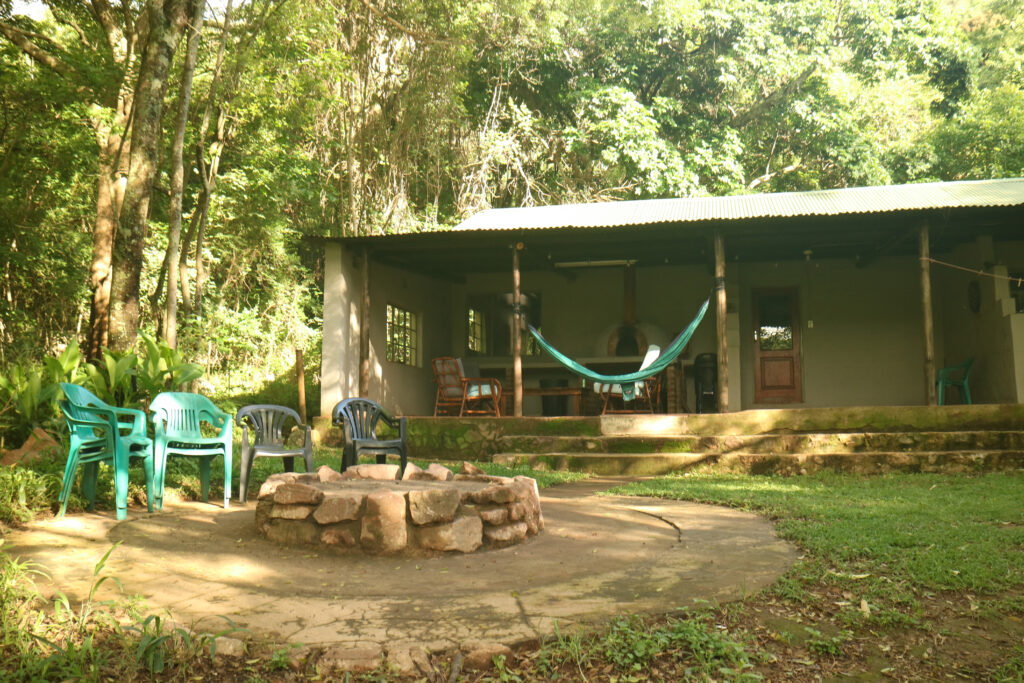
Interns will stay in the “Barn’’ which has multiple separate rooms that can house 2-3 people. Depending on the amount of students present during your stay you may be required to share a room. Bathrooms could be private or communal depending on your room. We have a communal workspace in the Barn as well as a communal kitchen and living space. There is also an outdoor patio, pizza oven and braai area where we host our social evenings. All accommodation is self-catering and fully equipped for a comfortable stay. The Barn includes electric lighting, gas burner, fridge, deep freeze and a fire powered hot water boiler. Wi-Fi is available to students at the camp as the cell phone reception across the property, including the camp, is limited.
Lajuma runs on solar power. Due to the unpredictable weather in the mountain and the strain on electricity, certain items that require a high amount of power cannot be used, including hairdryers/straighteners, water heaters, air fryers, toasters and microwaves. Therefore the Barn makes use of gas for cooking appliances and A+ energy-saving fridges.
Our water is provided by our natural springs in the mountain. This is safe to drink. We make use of a donkey system for hot water, where students keep a fire stoked under a water tank.